Does Russia Really Outproduce NATO in Ammunition by Fourfold? A Fact-Based Analysis
NATO Secretary General Mark Rutte claims Russia produces four times more ammunition than the alliance. Current data confirms this gap, but NATO’s industrial push in 2025 may begin to close it.
 Editor2


Does Russia Really Outproduce NATO in Ammunition by Fourfold? A Fact-Based Analysis
DREAMS WISDOM / BRUSSELS, BELGIUM
Rutte’s Stark Warning: “We’re 25 Times Richer, Yet Far Behind”
NATO Secretary General Mark Rutte recently reignited a major concern: Russia's annual ammunition production now surpasses NATO's by as much as four times. Speaking in London last month, Rutte emphasized, “Russia produces in three months what all NATO allies combined produce in a year.”
He called it “shocking” that a $2 trillion economy could outproduce a $50 trillion alliance. Despite NATO’s economic supremacy, Russia appears to be gaining ground on the battlefield through sheer industrial might.
But is this claim supported by the data?
What Do We Know About Russia’s Production Capacity?
While exact figures remain classified, intelligence reports and independent assessments offer a clear trend: Moscow has drastically ramped up production since its full-scale invasion of Ukraine in 2022.


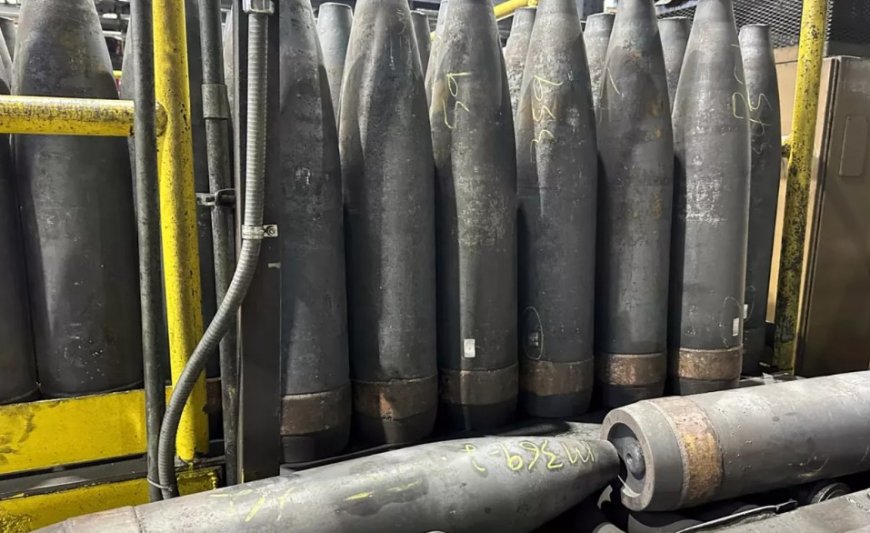
According to Estonia’s Foreign Intelligence Service, Russia’s artillery shell output rose from 400,000 in 2022 to 4.5 million rounds by 2024—a more than 11-fold increase. A similar estimate was published in May 2024 by Bain & Company, confirming that Russia either produced or refurbished around 4.5 million rounds.
Most of these shells are 122mm and 152mm—considerably cheaper and easier to manufacture than NATO-standard 155mm shells. While a 152mm shell costs around $1,000 to produce, NATO's 155mm rounds average around $4,000.
Additionally, Russia has reportedly sourced significant external stockpiles. A leaked South Korean intelligence report alleges that North Korea has shipped 12 million artillery shells to Russia—though this figure remains unverified. Satellite analysis by the Wall Street Journal also confirmed expansion in North Korean ammunition facilities.


Where Does NATO Stand?
Rutte’s statement gains credibility when comparing known production figures.
In 2024, NATO countries—including the U.S. and European nations—produced an estimated 1.2 million artillery shells. In contrast, Russia’s output was around 4.5 million, aligning with Rutte’s claim of a 4:1 production advantage.
However, Western allies have laid out ambitious plans to close this gap:
-
The European Commission aims to reach 2 million shells annually by the end of 2025.
-
The U.S. Department of Defense targets 100,000 shells per month by October 2025.
-
Czech-led initiatives have already delivered 1.6 million shells to Ukraine via international donations from 16 countries.
If these targets are met, the gap could significantly narrow in the coming year.
Key Bottleneck: Explosives and Supply Chain Strain
One of the main challenges facing NATO’s ramp-up is access to critical components—particularly explosives like TNT. Currently, only one facility in Poland actively produces TNT in Europe, which limits manufacturing scalability.
Experts stress that industrial revival is more than just funding factories—it requires a resilient, long-term supply chain that includes raw materials, skilled labor, and political coordination.
Verdict: Rutte’s Claim Is Largely Accurate—for Now
The data largely supports Rutte’s statements. As of 2024, Russia is producing around four times more ammunition than NATO. However, with aggressive investment and international coordination, NATO could close that gap—provided it meets its own ambitious targets.
Ukrainian President Volodymyr Zelensky recently said he expects up to 3 million shells from allies this year, with 1.8 million coming from Czech-led programs. Yet delays and shortfalls in past promises leave room for skepticism.
While NATO’s economy may be 25 times larger than Russia’s, its defense industry still has a long way to go to match Moscow’s wartime momentum.
Hashtags:
#NATO #Russia #Ammunition #Ukraine #Rutte #NorthKorea #Defense #Artillery