Putin’s Strategic Miscalculation: Pushing Ukraine and Its Neighbors Toward NATO
Putin's war on Ukraine backfired, reviving NATO, uniting Ukraine, and isolating Russia. This analysis explores how the invasion has become a strategic and moral defeat for Moscow.
 Editor2


YUSUF INAN / YEREL GÜNDEM / MOSCOW – KYIV
Putin’s Strategic Miscalculation: Pushing Ukraine and Its Neighbors Toward NATO
Introduction: Ukraine’s Awakening, Russia’s Decline
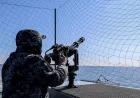
Russia’s 2022 invasion of Ukraine marked a seismic turning point in global geopolitics. What was branded by the Kremlin as a “special military operation” has, in reality, catalyzed Ukraine’s national reawakening while isolating Russia diplomatically, economically, and strategically. In launching a war intended to prevent NATO’s expansion, Vladimir Putin unwittingly achieved the opposite: Ukraine became a symbol of resistance, while Russia emerged increasingly cut off from the global system it once hoped to shape.
Ukraine’s National Identity Forged in Fire
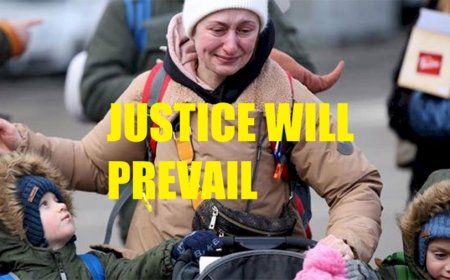
Before the war, Ukraine was a fractured nation—politically unstable and economically fragile. But the full-scale Russian invasion served as a nation-defining moment. Rather than fleeing, the Ukrainian people mobilized. Despite facing relentless shelling, mass civilian casualties, and daily blackouts, they stayed—and fought. Ukraine declared a full mobilization, and millions chose to remain in their homeland rather than seek refuge elsewhere.
Even Ukrainians who had emigrated to Europe and beyond are now choosing to return, driven by a renewed sense of patriotism. Their cities may be bombed and their homes destroyed, but their identity has never been stronger. The sight of amputees in the streets and overflowing cemeteries only deepens their national unity. This war has created not just a resistance, but a renaissance of Ukrainian nationhood.


Putin’s Greatest Strategic Error: Inviting NATO to His Doorstep
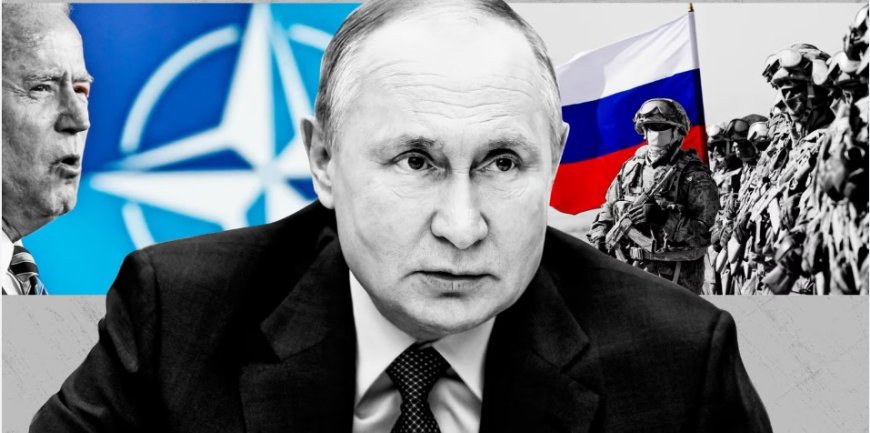
Putin’s pretext for war was to halt NATO’s eastward expansion. Instead, the invasion pushed Finland and Sweden—longstanding neutral nations—into the alliance. Georgia, Moldova, and the Baltic states have also accelerated their alignment with the West. Ukraine, even without formal membership, now operates as a de facto NATO partner, with real-time military coordination, Western weapons systems, and joint intelligence operations in place.
Rather than pushing NATO away, Russia has brought it closer—both physically and politically. What was once a distant threat is now entrenched on Russia’s very doorstep.
Global Rejection: Russia’s Deteriorating Image and Internal Strain
Beyond the battlefield, Russia has suffered a significant reputational collapse. Russian citizens abroad are increasingly reluctant to identify themselves. Visa restrictions, sanctions, and cultural boycotts have further alienated the Russian diaspora.


Domestically, the Russian Federation’s multi-ethnic and semi-autonomous regions—particularly in the Caucasus and Siberia—are growing more disillusioned with the central government in Moscow. Instead of unifying the federation, the war has sown the seeds of potential fragmentation. The notion that Russia is a “powder keg” no longer feels theoretical—it is becoming a geopolitical risk.
The Decline of the Energy Empire
Russia’s historical leverage over Europe—its energy exports—has been severely eroded. The European Union, once heavily dependent on Russian gas, has diversified its energy sources at an unprecedented rate. Russian oil now flows to China and India at steep discounts, and the ruble has become increasingly unstable.
Major global corporations have pulled out of the Russian market. Foreign investment has dried up. The long-term effects are clear: Russia is becoming economically isolated and technologically stagnant.
A Crisis of Moral Legitimacy
President Putin often references religious and spiritual values, even quoting from the Quran. In 2022, he publicly read verse 103 from Surah Al-Imran:
“Remember the favor of Allah upon you when you were enemies and He brought your hearts together and you became brothers by His favor.”
Yet this spiritual language rings hollow against the backdrop of mass displacement, civilian deaths, and urban devastation caused by Russian aggression. The war has stripped Russia of its moral high ground—even among many of its historical allies.
Perhaps most significantly, the emotional bond between the Russian and Ukrainian peoples—once considered inseparable—has been permanently severed. Russian missiles have struck cities where Russian pilots' own families still live. The war is not only a geopolitical disaster but a cultural tragedy.
NATO and the West: Here to Stay
The United States and NATO are now deeply embedded in Ukraine’s defense architecture. Western advisors, weapons, and aid are omnipresent. Far from a short-term intervention, this partnership is evolving into a long-term strategic alignment. Ukraine, once under Russian influence, is now firmly within the Western sphere.
For Russia, this is not just a strategic failure—it is a generational one. By trying to prevent NATO’s presence, Moscow ensured its permanence.
Conclusion: True Wars Are Not Won with Bombs, But with Strategy
In the 21st century, power is not measured merely by tanks and missiles, but by diplomacy, innovation, and soft power. Russia’s war on Ukraine showcased its conventional military might, but also exposed its strategic vulnerabilities. Meanwhile, NATO has tested Russia’s limits and found its weaknesses.
If Putin truly believes in the spiritual values he invokes, the time has come for humility. Peace must not be imposed by the West, nor dictated by Moscow—it must be forged directly between Kyiv and Moscow, free from external manipulation. Russia and Ukraine do not need the U.S. or NATO to end this war—they need political courage and historical wisdom.
For Russia, the path forward is not conquest, but integration. Ending the war could reopen the door to global legitimacy and restore the dignity of a civilization now teetering on the edge of irrelevance.
Peace is power. War is loss. The time to choose has come.

YUSUF İNAN / PEACE AT HOME, PEACE IN THE WORLD (*)
Twitter : @Yusufinan2023
Instagram : yusufinan2023
Instagram : fondinan2016
Email : gundem@sehitlerolmez.com
Website : www.sehitlerolmez.com
(*) As Mustafa Kemal Atatürk, the founder of modern Turkey, once said, 'Peace at Home, Peace in the World.' This timeless principle serves as a guiding light for nations striving for harmony, coexistence, and global stability.
Hashtags:
#Putin #Ukraine #NATO #Russia #Zelensky #Kremlin #WarInUkraine #StrategicBlunder