The Turkish Nation: From February 28 to Erdogan, Now Drifting Towards Imamoglu!
The Turkish nation has been caught in a cycle of political instability, shifting its hopes from one leader to another. From February 28 to Erdoğan, and now towards İmamoğlu, will Turkey find true stability or continue its search for justice? An in-depth analysis of Turkey’s ongoing political struggles and the need for systemic change.
 Editor



WRITED BY YUSUF İNAN
The Turkish Nation: From February 28 to Erdogan, Now Drifting Towards Imamoglu!
The Turkish nation has witnessed a history of political turmoil, shifting its trust from one leader to another, only to be left with disappointment. From the February 28 process to the rise of Recep Tayyip Erdoğan, and now to the potential embrace of Ekrem İmamoğlu, Turkey’s political trajectory seems to be one of continuous uncertainty.
Who is Responsible for These Endless Struggles?
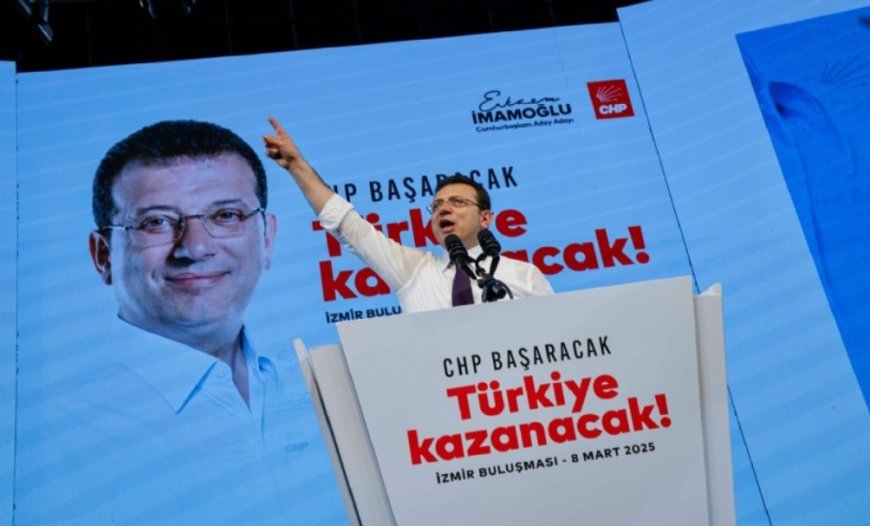
Turkey was left reeling from the failures of Mesut Yılmaz, Tansu Çiller, and Bülent Ecevit, culminating in the February 28 military memorandum. In search of stability, the nation turned to Erdoğan and the Justice and Development Party (AKP) as a beacon of hope. Now, nearly 25 years later, a growing segment of the population is looking for a way out of the AKP era, placing their hopes in Ekrem İmamoğlu.


Is this constant search for salvation truly fate, or is it a symptom of deeper systemic failures?
A History of Political Desperation
In the 1970s, Turkey oscillated between Bülent Ecevit and Süleyman Demirel, while figures like Alparslan Türkeş and Necmettin Erbakan attempted to shape the political landscape. The outcome? The military coup of September 12, 1980.
Seeking a remedy to military rule, the people embraced Turgut Özal. Yet, as time passed, economic crises ensnared the nation once again, leading to another wave of political instability. The Turkish people, weary of economic hardships, saw no choice but to search for another alternative.


The nation’s destiny seems to be a cycle of hope and disappointment. The collapse of the Ottoman Empire saw leaders flee to British ships, leaving the empire to its fate at the hands of foreign powers. Yet, divine providence, perhaps, granted the Turkish people another chance through sheer resilience, as they rebuilt their nation from the ashes.
From One Leader to Another: A Perpetual Search for Stability
The trajectory of modern Turkish history has followed a predictable pattern:
-
Atatürk and İnönü: The foundation of the Republic and the single-party rule.
-
Menderes and the 1960 Coup: The rise of democracy, followed by military intervention.
-
Demirel and Ecevit: Political rivalries leading to economic decline and instability.
-
The 1980 Coup: Another military intervention disrupting democratic governance.
-
Turgut Özal, Demirel, Çiller, and Yılmaz: A series of weak coalitions failing to deliver lasting solutions.
-
Erdoğan and the AKP: A period of economic growth, later marred by authoritarianism and economic downturn.
-
The Imamoğlu Alternative: A potential shift in power, driven by public fatigue with the AKP.
The pattern is evident: when one political figure fails, the people desperately seek another, only to find themselves trapped in the same cycle.
A Nation Searching for Justice
Today, Turkey is a country where infants grow up in prisons, children reach the age of nine without their fathers, and families are torn apart by legal injustices. The people’s longing is clear: a future where justice prevails, where families are not shattered, and where politics does not decide the fate of innocent children.

After seven years spent without a father, Elif has turned nine. Yet, her father still cannot be by her side. A heartfelt thanks to the Turkish legal system for this applaudable(!) justice.
The Turkish people now look towards Ekrem İmamoğlu and his team, just as they once sought hope in Erdoğan. But will they, too, one day struggle to free themselves from this new leadership?
Breaking the Cycle
The fate of the Turkish nation should not be one of continuous hardship. A system where governance is based on justice, merit, and democratic integrity must replace the current model of reactionary politics.
When will the struggles of the Turkish people end? Only God knows. But what is certain is that the people must demand not just a change of leaders, but a transformation of the system itself.

YUSUF İNAN / PEACE AT HOME, PEACE IN THE WORLD (*)
Twitter : @Yusufinan2023
Instagram : yusufinan2023
Instagram : fondinan2016
Email : gundem@sehitlerolmez.com
Website : www.sehitlerolmez.com
(*) As Mustafa Kemal Atatürk, the founder of modern Turkey, once said, 'Peace at Home, Peace in the World.' This timeless principle serves as a guiding light for nations striving for harmony, coexistence, and global stability.