Toward a Terror-Free Turkey: Will the PKK and Öcalan Apologize for the Massacres of Children and Civilians?
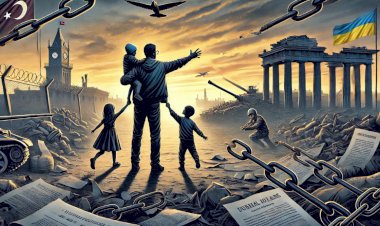
As Turkey enters a new era under the “Terror-Free Turkey” initiative, calls grow for the PKK and its leader Abdullah Öcalan to apologize for decades of deadly attacks on children, babies, women, and civilians — from 11-month-old Bedirhan to 16-year-old Eren Bülbül.
 Editor2
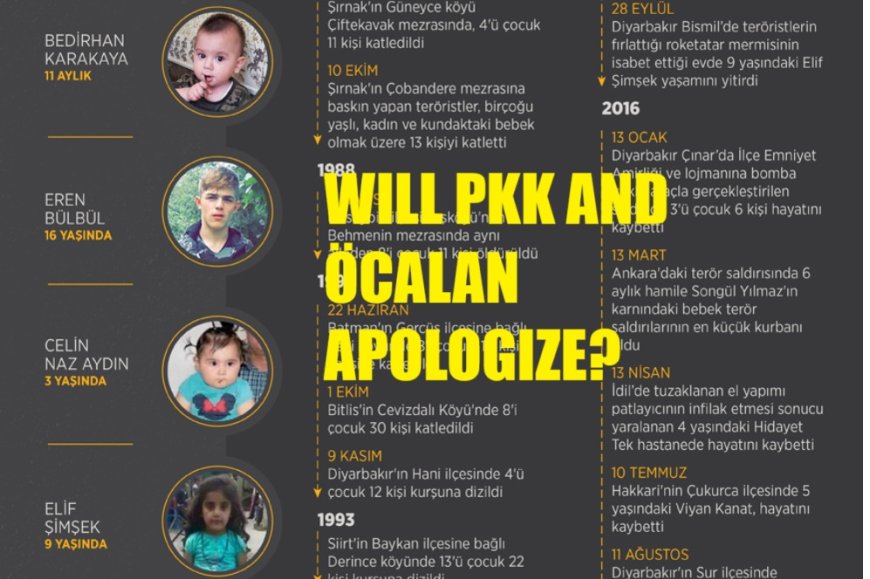


YUSUF İNAN WRITES...
YUSUF İNAN WRITES... “A Grim History of Attacks on Babies, Children, and Civilians: From Bedirhan to Serkan – Will the PKK and Öcalan Ever Apologize?”
1. “A Terror-Free Turkey”: New Hopes, Lingering Wounds
Turkey has entered a new chapter with the “Terror-Free Turkey” strategy, announced under the leadership of Nationalist Movement Party (MHP) Chairman Devlet Bahçeli. In this context, PKK leader Abdullah Öcalan—serving a life sentence since 1999—has reportedly conveyed his support for the initiative through prison channels.
While some view this as a step toward peace, a deep sense of unease and anger persists among the public, particularly among the families of fallen soldiers and civilians.


2. Massacres That Will Not Be Forgotten
Since the late 1980s, the PKK’s brutal attacks on civilians have left permanent scars on Turkey’s collective memory:
-
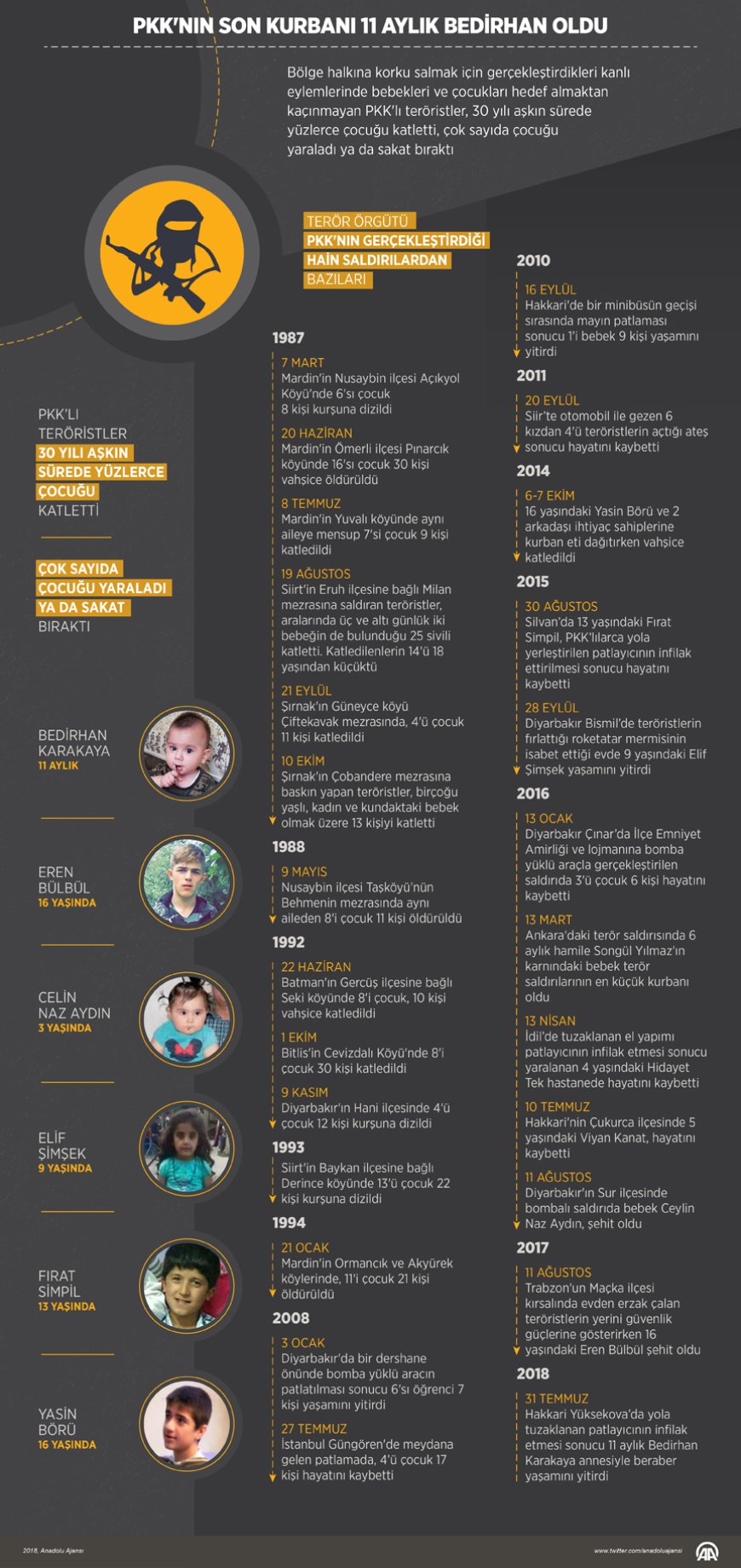
Bedirhan Karakaya (11 months) — July 31, 2018, Hakkâri/Yüksekova, Susat Stream: A roadside bomb planted by PKK militants exploded as the vehicle carrying his mother, Nurcan, passed by. Both were killed.
-
Eren Bülbül (16) — 2017, Maçka/Trabzon: Killed alongside gendarmerie officer Ferhat Gedik while assisting security forces in locating PKK militants.



Earlier Civilian Massacres (1987–1995):
-
Derince (1993): 3-year-old Serkan Erdem was shot dead in a schoolyard along with 21 others.
-
Nusaybin (1987): 6 children among 8 victims.
-
Pınarcık (1987): 16 children among 30 killed.
-
Eruh (1987): 3-day-old and 6-day-old infants among 25 civilians murdered.
-
Numerous other village raids targeted women, children, and the elderly.
Urban Bombings:
-
Diyarbakır tutoring center (2008): 7 dead (6 students), 73 injured.
-
İstanbul/Güngören (2008): 17 dead, including children aged 3 to 12; 154 injured.
-
İstanbul/Bağcılar (2009): 17-year-old Serap Eser burned alive in a firebombed bus.
-
Hakkâri minibus (2010): 9 dead, including 2-year-old Nurullah and 11-month-old Zeynep.
-
Çınar police compound (2016): 6 killed, including a 5-month-old baby.
-
Ankara Güvenpark (2016): 36 dead, including the unborn child of 6-months-pregnant Songül Yılmaz.
-
Ceylin Naz Aydın (infant) — 2016, Sur/Diyarbakır: Killed in a bombing.
This tragic record reveals that over more than three decades, hundreds of children, infants, women, and elderly civilians have fallen victim to PKK violence.
3. “Martyrs’ Families and Veterans Demand Accountability”
Yusuf İnan, Editor-in-Chief of —a news platform dedicated for 26 years to defending the rights of martyrs’ families and veterans—argues that the PKK and its leader Abdullah Öcalan must take the first step by issuing a public apology and acknowledging responsibility.
According to İnan, this is not only a moral obligation toward grieving families but also a necessary foundation for any meaningful reconciliation process.
4. The “Baby Killer” Label
In the public consciousness, Öcalan is seen as morally and sociologically responsible for these atrocities. The Derince schoolyard massacre, where toddlers were killed, cemented his image as the “Baby Killer” in Turkish society.
A public apology, therefore, is not merely symbolic—it is an ethical imperative.
5. Peace Must Begin with Justice and Conscience
The language of peace offers hope. But peace cannot be built on silence or denial.
This process must not serve as a victory narrative for any side, but rather as a journey of truth, justice, and healing—where victims are acknowledged and their voices heard.
An independent Truth and Justice Commission should be established to investigate these crimes and identify those responsible.
6. Is Turkey Ready?
There is a growing societal will to confront the past.
Martyrs’ families and veterans expect a moral response.
An apology should not be viewed as a political concession, but as a social and ethical starting point.
True reconciliation is possible only when disarmament is accompanied by a full recognition of the human cost.

YUSUF İNAN / PEACE AT HOME, PEACE IN THE WORLD (*)
Twitter : @Yusufinan2023
Instagram : yusufinan2023
Instagram : fondinan2016
Email : gundem@sehitlerolmez.com
Website : www.sehitlerolmez.com
(*) As Mustafa Kemal Atatürk, the founder of modern Turkey, once said, 'Peace at Home, Peace in the World.' This timeless principle serves as a guiding light for nations striving for harmony, coexistence, and global stability.