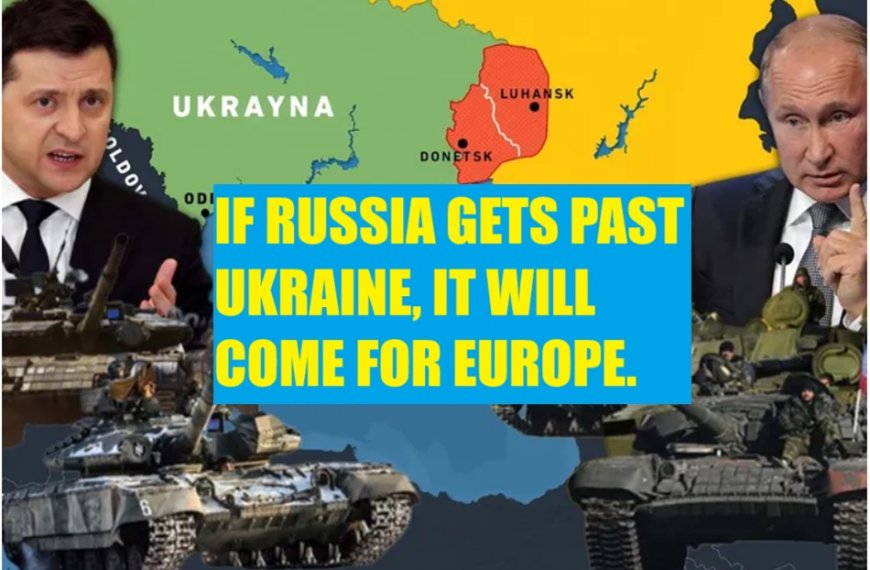
Europe’s Commitment to Ukraine: Between Rhetoric and Military Reality
European leaders back Ukraine politically, but have delayed sending advanced defense systems. Washington’s summit will test whether Europe can close the gap between rhetoric and action.
 Editor2


YUSUF İNAN WRITES...
Europe’s Commitment to Ukraine: Between Rhetoric and Military Reality
A Critical Meeting in Washington
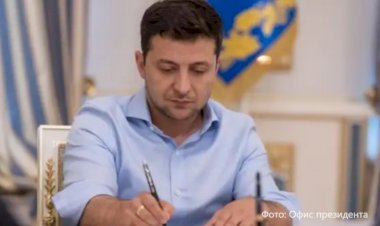
On August 18, Ukrainian President Volodymyr Zelensky is set to meet U.S. President Donald Trump at the White House. The meeting follows the Alaska summit between Trump and Russian President Vladimir Putin, which ended without a ceasefire. European leaders — including German Chancellor Friedrich Merz, French President Emmanuel Macron, Italian Prime Minister Giorgia Meloni, British Prime Minister Keir Starmer, and European Commission President Ursula von der Leyen — have confirmed their attendance.
Their presence underscores Europe’s stated solidarity with Ukraine. Yet the crucial question remains: why has Europe not deployed its most advanced air defense systems to protect Ukrainian cities under daily bombardment?
Europe’s Arsenal and Ukraine’s Needs
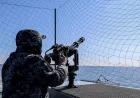
European states have significantly expanded their defense industries since Russia’s 2022 invasion. Defense companies such as Rheinmetall and MBDA have tripled production of ammunition and missiles. Systems already available include:
-
IRIS-T SLM (Germany): Successfully used in Ukraine but limited in number.

-
Patriot (U.S. and Germany): Effective but increasingly challenged by Russia’s upgraded missiles.
-
SAMP/T Aster (France-Italy): A capable medium- to long-range system, but stockpiles remain thin.
-
Gravehawk (United Kingdom): A newly developed, mobile short-range air defense system.
-
Skyranger 30 (Germany): Designed to counter drones and cruise missiles.




In theory, these assets could significantly reduce the damage inflicted by Russian missile and drone strikes. In practice, the pace of deployment has been slow and hesitant.
Humanitarian and Strategic Consequences
The human cost of delay is severe. Russian strikes continue to destroy infrastructure and civilian areas, leaving families displaced and communities without water or electricity. Ukrainian society faces not only physical destruction but also growing psychological exhaustion.
Strategically, the lack of robust air defenses undermines deterrence. Moscow interprets Europe’s gradualist approach as weakness. For many in Kyiv, the gap between Europe’s statements of solidarity and the actual delivery of advanced defense systems has become a matter of survival.
The Logic of Deterrence: Ukraine as Europe’s Shield
Analysts argue that supporting Ukraine with advanced defense systems is not charity, but self-preservation. By intercepting Russian attacks over Ukraine, Europe effectively prevents those same threats from one day reaching its own cities. Macron has framed it bluntly: “If we are not strong today, we will pay the price tomorrow.”
For Europe, the defense of Kyiv and Kharkiv is inseparable from the defense of Warsaw, Berlin, or Paris.
Political and Logistical Constraints
Several factors explain Europe’s hesitation:
-
Limited stockpiles: Many governments are reluctant to deplete national reserves.
-
Escalation fears: Leaders remain cautious about provoking direct confrontation with Russia.
-
U.S. dependence: Europe still relies heavily on American intelligence, surveillance, and missile defense integration.
While these concerns are not unfounded, the costs of inaction are becoming more apparent as the war grinds on.
Conclusion: A Narrow Window for Action
As leaders gather in Washington, the choice before Europe is clear. Either advanced air defense systems are deployed now — to protect Ukrainian civilians and stabilize the frontlines — or Europe risks facing the long-term consequences of a weakened Ukraine and a strengthened Russia.
Words alone will not shield cities from missiles. The credibility of Europe’s commitment to Ukraine will be measured not in declarations, but in the systems that actually reach the battlefield.
Hashtags: #Europe #Ukraine #Russia #NATO #Security #Washington

YUSUF İNAN / PEACE AT HOME, PEACE IN THE WORLD (*)
Twitter : @Yusufinan2023
Instagram : yusufinan2023
Instagram : fondinan2016
Email : gundem@sehitlerolmez.com
Website : www.sehitlerolmez.com
(*) As Mustafa Kemal Atatürk, the founder of modern Turkey, once said, 'Peace at Home, Peace in the World.' This timeless principle serves as a guiding light for nations striving for harmony, coexistence, and global stability.