How Vitaly Kim’s photo became a symbol of Ukrainian resilience
Mykolaiv Governor Vitaly Kim’s relaxed wartime photo became a symbol of morale, humor and civilian resilience during Russia’s attacks on Ukraine.
 Editor2


By Yusuf İnan
Journalist | Political & Strategic Analyst
ANKARA, TURKEY | MYKOLAIV, UKRAINE — A single wartime photograph of Mykolaiv Governor Vitaly Kim became one of Ukraine’s most striking symbols of resilience, morale and psychological resistance during Russia’s assault on the country.
In the first months of Russia’s full-scale invasion, Mykolaiv became one of the most important cities in southern Ukraine. Located on the route toward Odesa and the Black Sea coast, the city carried both military and symbolic weight. If Russian forces had taken Mykolaiv, pressure on Odesa and Ukraine’s southern defense line would have increased sharply. For Ukraine, holding the city meant defending not only territory but also public confidence at a time when the country was fighting for survival.
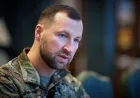
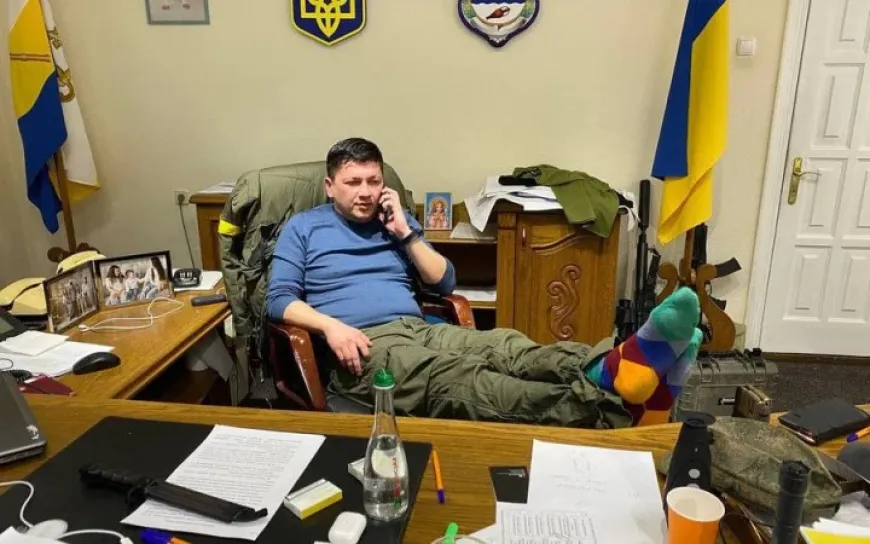
Vitaly Kim, the governor of the Mykolaiv region, became one of Ukraine’s most recognizable local wartime officials through his frequent public messages, informal communication style and visible presence during attacks. His now-famous image — sitting calmly with his feet up, phone in hand, appearing relaxed despite the danger around him — became more than a viral photograph. It became a message: the city administration had not fled, the local leadership had not collapsed and fear would not define Mykolaiv.
A photograph stronger than an official statement
In wartime, communication is not built only through speeches, press briefings or military reports. Sometimes a single image can travel faster and speak more clearly than an official statement. Kim’s photograph did exactly that.
The image showed a regional leader who looked calm, informal and emotionally steady while his city was under attack. His posture suggested that Mykolaiv was still functioning, that local government remained in place and that Russian strikes had not broken public order.


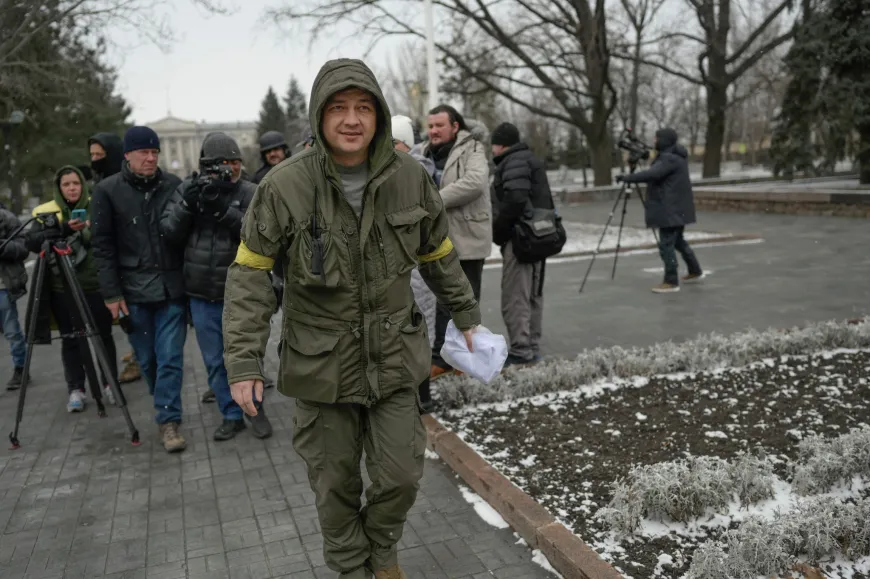
For civilians living under bombardment, this kind of image matters deeply. War does not only destroy buildings; it attacks the emotional balance of society. People hear sirens, see smoke rising from neighborhoods and wonder whether the state can still protect them. In those moments, the visible behavior of leaders becomes psychologically important.
Kim’s relaxed posture delivered a simple message: “We are here. We are working. We are not broken.”


That message was especially powerful because it did not look staged in the traditional political sense. It appeared informal, human and almost ordinary. In extraordinary conditions, that ordinary calm became extraordinary.
Mykolaiv under attack
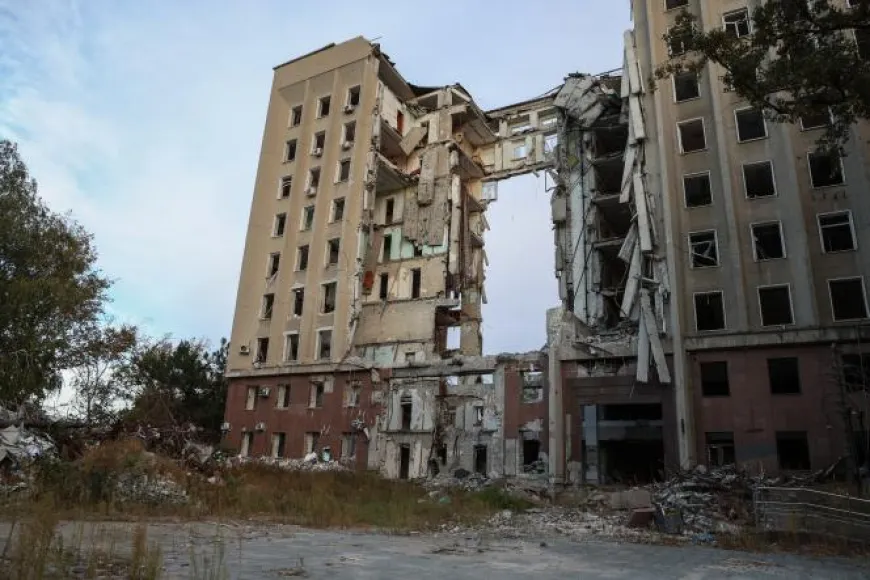
The symbolic power of Kim’s image grew after the Russian strike on the Mykolaiv regional administration building in March 2022. The attack badly damaged the government building, and Kim later said that his own office had also been hit.
That context gave the photograph additional force. This was not a leader posing far from danger. This was a regional governor whose workplace had become a target, yet who continued to appear before the public and communicate.
The destruction of an administrative building carries a message beyond physical damage. It is meant to tell civilians that authority is vulnerable, that order can collapse and that the enemy can reach the center of government.
Kim’s response disrupted that intended psychological effect. Instead of projecting fear, he projected steadiness. Instead of disappearing from view, he remained visible. Instead of allowing the attack to define the emotional atmosphere, he helped reframe it as another moment of resistance.
This is why the image resonated so strongly. In moments of collective trauma, people often look to leaders for emotional cues. A frightened leader can deepen panic. A calm leader can help restore direction. Kim’s image gave Mykolaiv that stabilizing signal.
The Putin table montage
The real photograph of Kim in his relaxed wartime posture later inspired a widely shared montage placing him at Russian President Vladimir Putin’s long table. The edited image was not a real meeting; it was a symbolic and political visual statement.
Putin’s long table had already become a global image associated with distance, control and isolation. Kim’s relaxed body language, informal style and colorful socks represented the opposite: closeness, humor and civilian courage.
The contrast was immediate. On one side stood the image of rigid power and imperial distance. On the other stood a Ukrainian regional leader whose posture seemed to say that fear had failed.
The montage worked because it needed little explanation. Viewers understood the emotional contrast instantly. Russia projected intimidation; Ukraine answered with irony. Russia sought to dominate not only territory but also the psychological space; Ukraine showed that it could resist in both.
The image also showed how quickly wartime symbolism can move from local politics into international media culture. A regional governor’s informal photograph became part of a global visual conversation about power, courage and morale.
Humor as psychological resistance
Humor in war is often misunderstood as unserious. In reality, it can become one of the strongest forms of psychological resistance. A society that can still laugh under attack is a society that has not surrendered emotionally.
Kim’s image and the Putin-table montage became part of a wider Ukrainian wartime culture of humor. Memes, informal videos, symbolic photos and sharp visual jokes helped Ukrainians manage fear and exhaustion. They also made Ukraine’s resistance emotionally understandable to international audiences.
The colorful socks in Kim’s image became part of its emotional force. They softened the brutality of the moment without denying it. They showed personality at a time when war tries to reduce people to victims, soldiers or statistics.
That detail made Kim look human, approachable and confident. For many Ukrainians, this was the kind of leadership image needed in the early phase of the invasion: not distant, not ceremonial, but present and emotionally resilient.
A morale signal to soldiers
The image did not speak only to civilians. It also carried a message for Ukrainian soldiers fighting on the front lines.
For soldiers, morale depends not only on weapons, logistics and command structure. It also depends on confidence that the rear is holding. Soldiers need to know that the cities they defend have not collapsed, that civil administration remains active and that the people behind them are not surrendering psychologically.
Kim’s photograph helped provide that reassurance. It showed that Mykolaiv’s leadership was still present. It suggested that the city was wounded but not paralyzed.
This matters because morale moves in both directions during war. Soldiers defend civilians, but civilian resilience also strengthens soldiers. A city that refuses panic gives its defenders a reason to continue.
In that sense, Kim’s image was not merely personal branding. It became part of the wider emotional infrastructure of resistance.
Mykolaiv as a Hero City
President Volodymyr Zelensky later recognized Mykolaiv as one of Ukraine’s Hero Cities, strengthening the city’s place in the national story of resistance. The title connected Mykolaiv’s military and civilian endurance to a broader Ukrainian narrative of defiance.
Kim’s photograph fit naturally into that story. It became one of the visual signs of a city that refused to break. The image did not replace the courage of soldiers, emergency workers, doctors, volunteers or civilians. But it gave that collective courage a recognizable face.
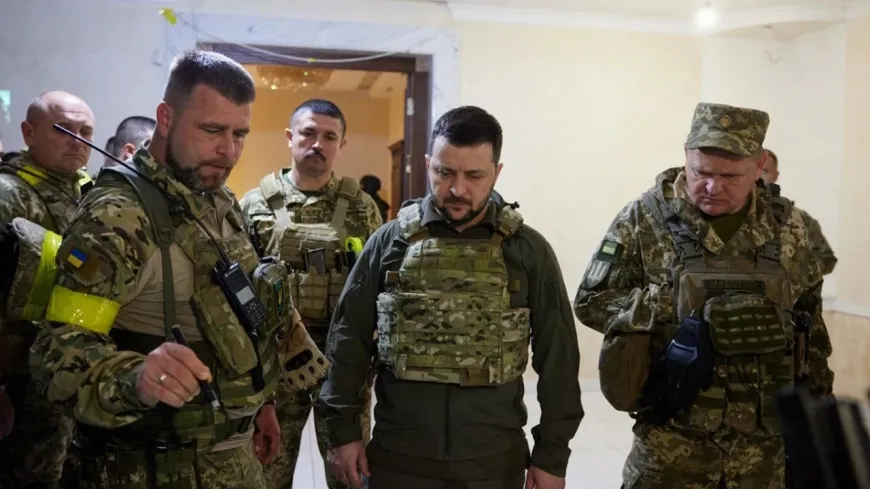
Zelensky’s own communication style also helped make Kim’s image resonate. From the first days of the invasion, Zelensky emphasized presence: staying in Kyiv, speaking directly to the public and showing that leadership remained inside the country. Kim’s image expressed the same principle at the regional level.
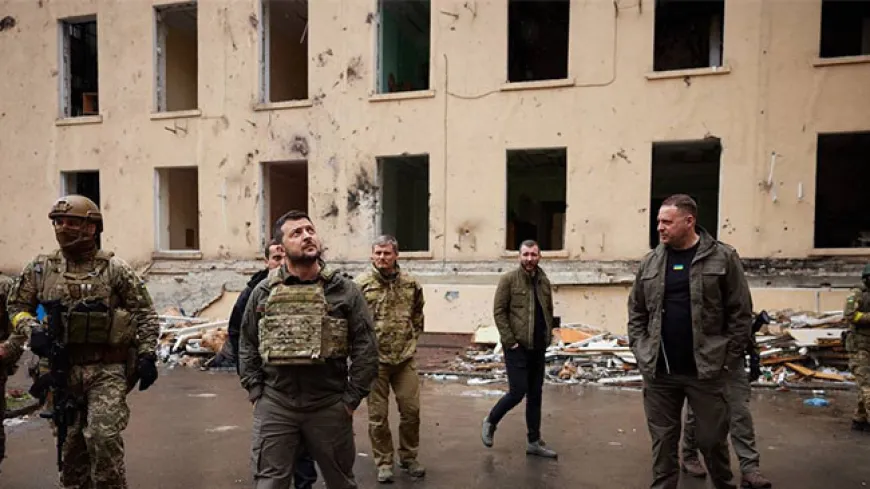
In both cases, the message was similar: leadership under attack begins with staying visible.
A psychological reading from iyipsikolog.com
According to a psychological reading by iyipsikolog.com experts, the photograph can be understood through the concept of emotional modeling in crisis. During periods of collective fear, people look to visible authority figures for signals about how to feel and how to behave.
If leaders appear panicked, society may become more anxious. If leaders appear calm, purposeful and present, the public can regain a sense of control. Kim’s posture communicated emotional regulation. His relaxed body language suggested that the situation, though dangerous, was not beyond endurance.
The humor in the image also matters psychologically. Humor does not erase trauma, but it can prevent trauma from fully controlling the emotional field. It allows people to breathe, connect and resist despair.
In this sense, Kim’s photograph functioned as a psychological anchor. It gave people a visual cue that fear could be contained, that the city remained alive and that the enemy’s attempt to impose panic had not succeeded.
One frame of strategic communication
The lasting importance of Kim’s photograph lies in its simplicity. It carried several messages at once: Mykolaiv stands. The administration is working. Russian attacks have not broken the city. Fear will not govern public life. Ukraine has not lost its humor.
In modern war, images are part of the battlefield. They shape morale, international perception and collective memory. Kim’s photograph became one of those images.
It showed that resistance is not only military. It is also emotional, civic and symbolic. A city can be defended with weapons, but it is also defended by confidence, humor and visible leadership.
For Mykolaiv, the image became a reminder that the city had suffered but had not surrendered. For Ukraine, it reinforced a public narrative of resilience. For the world, it offered a clear message: even under attack, Ukraine’s society and leadership remained psychologically present.
One frame was enough to show that Mykolaiv was wounded, but not broken.
Yusuf İnan
www.wisenewspress.com
Yusuf İnan is a journalist and author. He serves as Editor-in-Chief of WiseNewsPress.com, SehitlerOlmez.com, and YerelGundem.com, and specializes in strategic and political analysis of Turkish and global affairs.