Recent Russian drone over Mykolaiv traced to new production
A Russian Shahed drone shot down over Mykolaiv was manufactured less than three weeks ago, indicating a rapid "factory-to-frontline" deployment strategy by Moscow.
 Editor2


By Yusuf İnan | Wise News Press
MYKOLAIV, UKRAINE — A Russian Shahed-type kamikaze drone intercepted and destroyed over the southern Ukrainian city of Mykolaiv during a recent nighttime raid was manufactured a mere three weeks prior to its deployment, revealing startling new insights into the accelerated pace of Russia's military-industrial complex.
The discovery, made by Ukrainian military analysts examining the wreckage, highlights a significant shift in Russian logistical strategies. Rather than relying on stockpiled munitions, Moscow appears to be funneling newly produced uncrewed aerial vehicles (UAVs) directly from assembly lines to launch sites. This rapid deployment capability underscores the sustained and immediate threat posed to Ukrainian civilian and military infrastructure, suggesting that the aerial bombardment of southern regions will continue unabated as long as Russian factories remain operational.
Forensic analysis of the drone wreckage
The startling timeline of the drone's production and subsequent destruction was brought to light by Ukrainian military expert Serhiy Zholonko. Following the successful interception of the hostile UAV by local air defense units, specialized explosive ordnance disposal teams secured the scattered debris, allowing analysts to conduct a thorough forensic examination.
Zholonko published photographic evidence of specific components salvaged from the wreckage to substantiate his claims. The critical piece of evidence centered on a factory stamp located on the drone's wing structure. The marking, identified as "OChK lobovik," refers to a highly specific technical element: the detachable leading-edge segment of the wing console. Most importantly, stamped immediately adjacent to this technical designation was a clear production date.


The timeline: From assembly to destruction
The production date stamped on the recovered wing component clearly read March 30, 2026. Given that the drone was shot down over Mykolaiv in the late hours of April 19, the timeline from its final assembly to its explosive destruction was less than 21 days.
Zholonko elaborated on the logistical implications of this compressed timeframe. The expert noted that these specific Shahed-type loitering munitions are predominantly manufactured at the sprawling Alabuga Special Economic Zone in the Republic of Tatarstan, Russia.
"If we take into account the time required for assembly, configuration, quality control, testing, and transportation to the launch site (for example, from the factory to Cape Chauda in Crimea is more than 1,500 kilometers), we can assume that it arrived at the launch position conditionally the day before yesterday," Zholonko stated in his analysis.


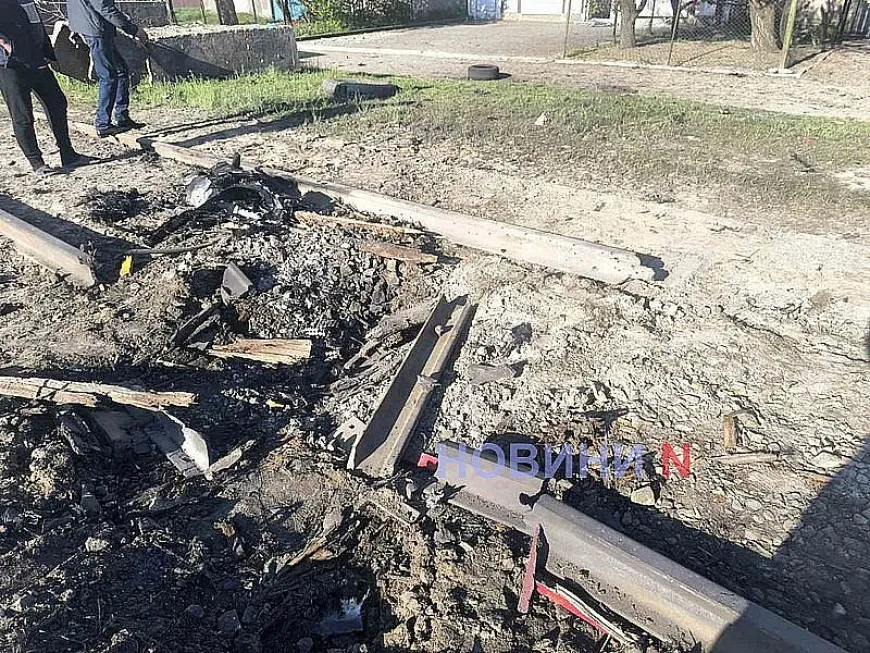
Military experts meticulously document the markings on the recovered fragments of a downed Shahed drone, Mykolaiv. (Photo: Agency/Wise News Press)
A "factory-to-frontline" logistical pipeline
The incredibly short lifecycle of the intercepted drone confirms that the Russian military is bypassing traditional warehousing and stockpiling procedures for these specific munitions. According to Zholonko, this indicates that the adversary is utilizing equipment straight "off the assembly line."
This continuous, rapid-fire logistical pipeline presents a significant challenge for Ukrainian defense planners. It demonstrates that the Alabuga manufacturing facility is operating at an exceptionally high, uninterrupted capacity. Despite extensive international sanctions aimed at crippling Moscow's access to vital electronic components and microchips, the production of these relatively low-cost, GPS-guided loitering munitions appears to be accelerating rather than slowing down.
Domestic production replaces Iranian imports
The findings from the Mykolaiv wreckage align with broader intelligence assessments regarding Russia's evolving drone warfare capabilities. During the initial phases of the full-scale invasion, Moscow relied almost entirely on importing fully assembled Shahed-131 and Shahed-136 drones directly from Iran.
However, over the past year, Russia has aggressively localized the production process. The Alabuga facility transitioned from merely assembling Iranian-supplied kits to manufacturing the airframes, engines, and internal guidance systems domestically. The fact that a drone produced on March 30 was already striking targets in southern Ukraine by mid-April suggests that this localized manufacturing process has achieved a highly streamlined level of operational efficiency.
Consequences of the nighttime attack
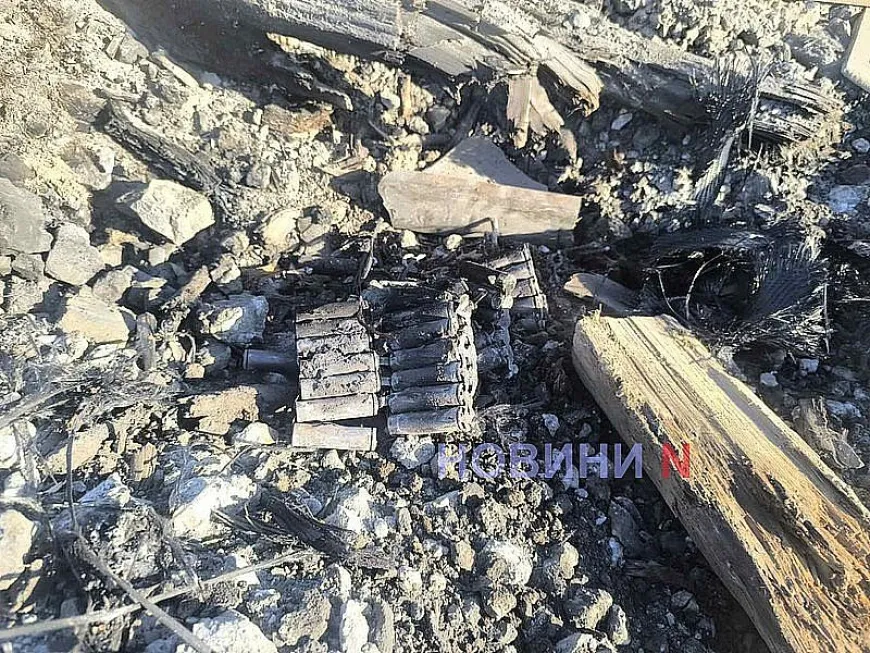
The drone in question was part of a larger swarm launched against Mykolaiv late Sunday evening. While the specific UAV analyzed by Zholonko was successfully intercepted, preventing a direct strike on its intended target, the kinetic energy of the interception still caused significant disruption.
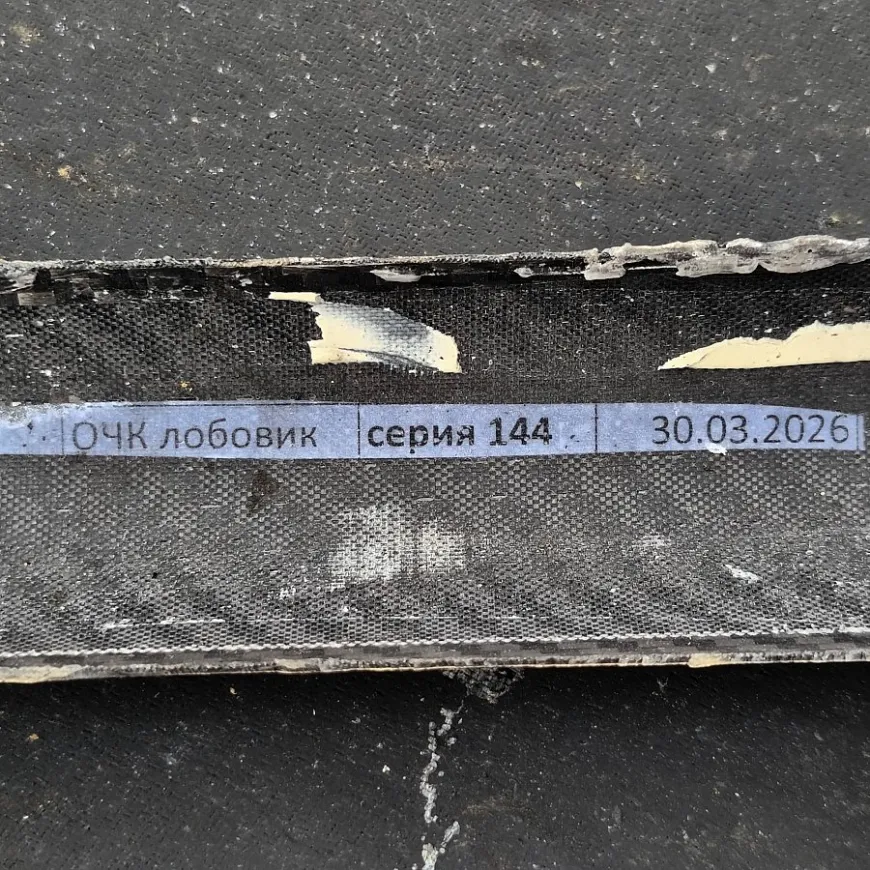
As reported extensively by local media outlets, the nighttime engagement resulted in a massive explosion over the city when the drone's high-explosive warhead detonated mid-air or upon impact with the ground. The resulting shockwave and falling debris caused substantial damage across residential areas. Local authorities confirmed that a multi-story apartment building, several private houses, and parked vehicles were damaged. Furthermore, the falling wreckage severed overhead power lines and warped a section of the city's tram tracks, temporarily disrupting utility and transport services. Fortunately, no civilian casualties were reported in this specific incident.
As Ukrainian air defense units brace for further attacks, the newly discovered production date serves as a grim reminder that the aerial war of attrition relies not on finite stockpiles, but on an active, continuously churning industrial base.