
Who Is the Lone Grave Space Reserved in the Prophet’s Chamber?
A review of recent false images claiming to show the Prophet’s grave, along with accurate details on its construction, history, and the lone grave reserved for Jesus (pbuh).
 Editor2
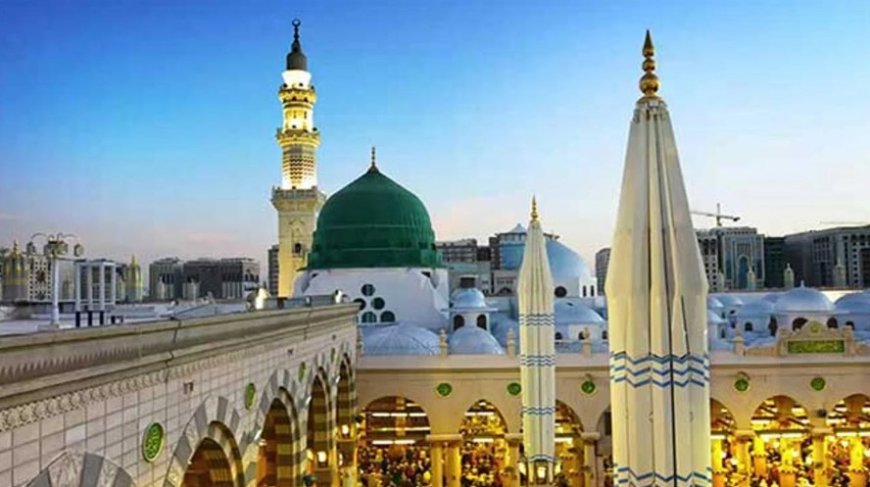


Who Is the Lone Grave Space Reserved in the Prophet’s Chamber?
DREAMSWISDOM.COM / MEDINA
Viral Photos Mislead the Public
In recent weeks, various newspapers and websites have circulated photos claimed to show the grave of the Prophet Muhammad (peace be upon him). Many people, moved by these images, have even turned them into posters to hang on their walls. However, experts warn that these pictures have no connection whatsoever to the Prophet’s actual resting place. In fact, the images in question actually belong to the tombs of Osman Gazi and Mevlana Jalaluddin Rumi. It is surprising that such famous tombs have been so easily misidentified.
How Is the Prophet’s Tomb Actually Structured?
The Prophet’s tomb is located within a chamber surrounded by two walls and covered with a roof. There is no door or window that allows entrance, making it impossible to access directly. According to historical sources, the Prophet’s grave is a simple earthen burial place lined with stones. When it was first made, it was slightly raised but later flattened over time.
The first recorded mausoleum in Islamic history is precisely this chamber, known as the Hujra al-Sa‘āda, where the Prophet was buried in the room of his beloved wife Aisha. The Prophet had stated that “Prophets are buried where they pass away,” which is why he was laid to rest there.
Three Companions Resting Together
Hazrat Aisha later arranged for her father, Hazrat Abu Bakr, to be buried beside the Prophet. Years later, Hazrat Umar asked Aisha for permission to be buried there as well, to which she responded, “I prefer Umar to myself.” After Umar was interred there, Aisha lived behind a curtain in the same room until her death in 57 AH, since Umar was a non-mahram to her. When she died, she could not be buried in the same place because there was only one grave space left.


Islamic tradition holds that this lone remaining grave spot has been reserved for Jesus (peace be upon him), in line with the hadith of the Prophet Muhammad:
“When Jesus returns to earth and dies, he will be buried next to me.”
Layers of Historical Protection
During Hazrat Umar’s time, the Prophet’s Chamber was surrounded by a short stone wall while expanding the Prophet’s Mosque. Later, Hazrat Abdullah bin Zubayr rebuilt and reinforced it. As incidents of crowding and noise arose, its entrance was sealed to protect the sanctity of the graves.


The Umayyad Caliph Walid, while serving as governor of Medina, heightened the walls and added a dome over them. Later, Caliph Umar bin Abdulaziz constructed a second five-sided wall around the tomb with no doors at all, further safeguarding it.
The Sacred Screen and the Green Dome
In later centuries, a protective grille called the Shabaka al-Sa‘āda was erected around the Prophet’s grave. Originally made of wood, then rebuilt in iron and painted green, the screen was covered with a cloth embroidered with Quranic verses. The famous Green Dome (Qubbat al-Khadra) seen today was originally constructed of lead by Sultan Qalawun in 1279 and later restored by the Ottomans, who also sent decorative cloths to cover the tomb area.
A Place Reserved for Jesus (pbuh)
The only vacant grave within the chamber, according to strong Islamic belief, has been set aside for Jesus. Prophetic traditions tell that Jesus will descend to earth at the end of times and will be buried beside the Prophet Muhammad after his death.
Visiting Etiquette
Today, the Prophet’s Chamber is not open to visitors. Instead, pilgrims pay their respects from outside the Shabaka al-Sa‘āda screen. Only designated caretakers of the Sacred Chamber are allowed inside for periodic cleaning. Traditionally, seven lamps illuminate the chamber: one larger lamp at the Prophet’s head and two smaller lamps at the heads of Abu Bakr and Umar.
Centuries of Preservation
Throughout history, even during the Crusades, the tomb faced threats, including an attempt to steal the Prophet’s remains via a secret tunnel. Nur al-Din Zengi ordered a trench filled with molten lead to protect it. Ottoman sultans maintained and restored the structure over centuries, preserving the spiritual atmosphere that continues today.