You Will Never Find My Spy!
A deep dive into the colorful history of Ottoman espionage, from Mehmed the Conqueror’s spies to modern Turkish intelligence.
 Editor2


You Will Never Find My Spy!
YEREL GÜNDEM / ISTANBUL
Secrets of the Ottoman Espionage Tradition
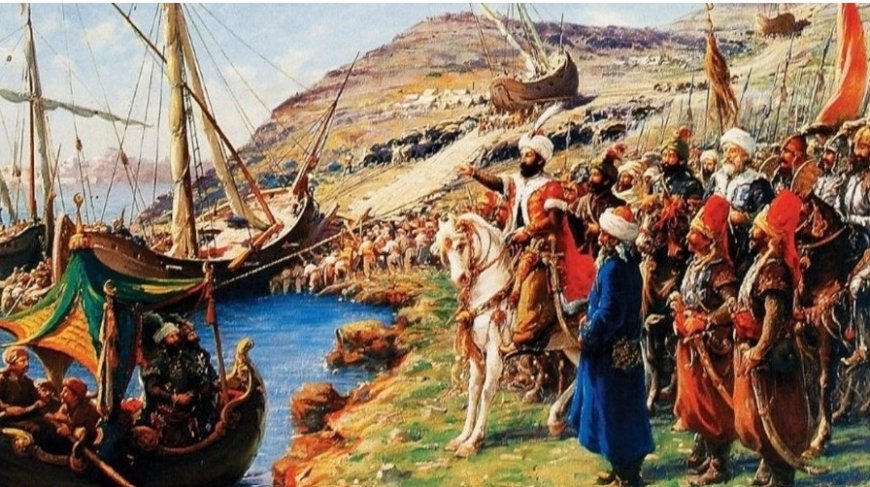
Espionage has played a pivotal role throughout Turkish and Ottoman history, often determining the outcomes of great military campaigns. During the siege of Constantinople, Sultan Mehmed II, known as Mehmed the Conqueror, relied on an extensive spy network to uncover the Byzantine Empire’s military secrets. There are even legends that the sultan himself disguised and entered the city to gather intelligence.
The Ancient Art of the Spy
In old Turkish terminology, spies were called çaşıt. The renowned Seljuk vizier Nizam al-Mulk, in his treatise Siyasetname, encouraged sending agents across the world disguised as merchants, travelers, dervishes, or doctors. He attributed the rise of extremist sects like the Batinites to the Seljuks’ intelligence failures. Sultan Alp Arslan, in contrast, was said to have scorned espionage as contrary to chivalry. Timur, on the other hand, deployed spies in every disguise to stir rebellions throughout Anatolia.
Strategy Over Brute Force
One striking Ottoman tale recounts how Tekfur of Bilecik planned to kill Osman Gazi at a wedding. However, Mihal, the lord of Harmankaya and a loyal friend, warned Osman in time. Osman Gazi then sent a herd of sheep as a wedding gift while requesting permission for his women and belongings to enter the castle, under the pretense of moving to highland pastures. Instead of household goods, he hid armed soldiers disguised as women among the loads. Once inside, these men easily captured the castle in 1300, taking advantage of the thin guard left behind.
Master Spies of the Empire
Under Mehmed II, Ottoman intelligence networks reached deep into Europe. Martolos, often non-Muslims trained by the state, served as spies abroad. Many were Jews who, due to their traditional animosity toward Christians, served as valuable double agents. These spies not only gathered intelligence but also spread exaggerated rumors to wage psychological warfare.


A telling quote from the 16th century by Hamza Bey, Ottoman governor of Istolni-Belgrad, is recorded by Hungarian historian Takats Sandor. Addressing an Austrian envoy, Hamza Bey declared:
“I know you have no soldiers anywhere. I have had a spy in Vienna for six years. He speaks your language, lives with his family, appears as a priest at times, other times as something else. You will never find him.”
The French Connection
Another legendary Ottoman agent was Mehmed Ağa, who operated under the alias Titus Moldariensis Clericus in France from 1637 to 1682 — an astonishing 40 years. Serving under Grand Admiral Küçük Ali Pasha, Mehmed Ağa’s letters were published by Genoese author Giovanni Paolo Marana, though some argue Marana may have invented parts of them.


The Birth of Modern Ottoman Intelligence
During the reign of Sultan Selim III in the late 18th century, Ottoman intelligence evolved toward modern diplomatic channels. Permanent embassies were established in Europe, aiming to collect regular political and military information. However, the system still failed at times. In 1799, when Napoleon invaded Egypt, the Ottoman ambassador in Paris reported that the French had no such plans. Sultan Selim famously scribbled on the report:
“What a foolish man!”
Policing the Empire
Domestically, intelligence was handled by officers within the Janissary corps. The asesbaşı (chief of police) and the böcekbaşı (investigator) oversaw crime and internal security, supported by neighborhood watchmen and even female agents. Every local resident was required to report suspicious activities to these officials, creating a community-based intelligence web.
Spies in the Age of Abdulhamid
By the 19th century, a modern intelligence structure emerged. In 1834, Sultan Mahmud II shifted these tasks to the newly formed Zabtiye Müşirliği, the forerunner of today’s police. Provincial jurnal (informant) clerks were appointed to regularly report back to Istanbul. Under Grand Vizier Reşid Pasha, a secret police modeled on the French system was formed.
When Sultan Abdulhamid II took power in 1876 after two coups, he reinforced this apparatus. In 1880, he founded a powerful Yıldız Intelligence Office known for its vast espionage network that reportedly covered 30,000 agents across the empire. These agents came from every walk of life — dervishes, mullahs, street performers, tribal leaders, even foreign pilgrims and merchants.
Failures and Consequences
Despite its scale, the Yıldız network could not prevent the infiltration of the palace’s code room by Young Turk sympathizers, showing that no intelligence structure is foolproof. As one Ottoman statesman put it:
“When fate strikes, even the eyes cannot see.”
Spies of the Turkish Republic
After the fall of Abdulhamid, the Young Turks disbanded the Yıldız network and established the Teşkilat-ı Mahsusa, a new agency that not only collected intelligence but also carried out covert operations both domestically and abroad.
In the early Republican era, this evolved into the National Security Service (MAH), strongly influenced by German advisors, before taking its present form as the National Intelligence Organization (MIT) after the 1960 military coup.
Source: Prof. Dr. Ekrem Buğra Ekinci