WRITED BY YUSUF İNAN...
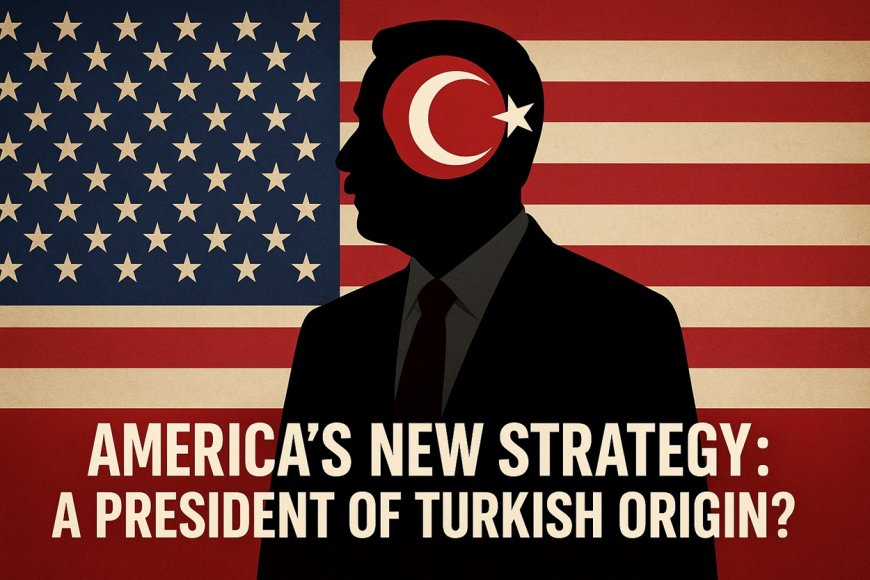
America’s new strategy: A president of Turkish origin?
U.S. President Donald Trump reacted to the election of Muslim Democrat Zohran Mamdani as New York’s mayor by saying, “Last night we lost part of our sovereignty in New York, but we will deal with it.” This remark came at a moment when the United States is fighting identity battles at home and influence battles abroad. In such a fluid global environment, the idea that, in the near future, a politician of Turkish origin could rise to the very top in the U.S. is not as far-fetched as it once sounded.
For decades, Washington has tried to keep the Middle East under control and to maintain influence in the Muslim world. Yet the recurring complaint — “we spend billions and still don’t get the dominance we want” — shows the project hasn’t fully worked. At this point a basic fact emerges: if the U.S. wants to preserve its global primacy, it cannot ignore Turkish support. A weakened, marginal Turkey makes America’s already eroding global position even more fragile; a strong, central Turkey, by contrast, can help stabilize the equation.
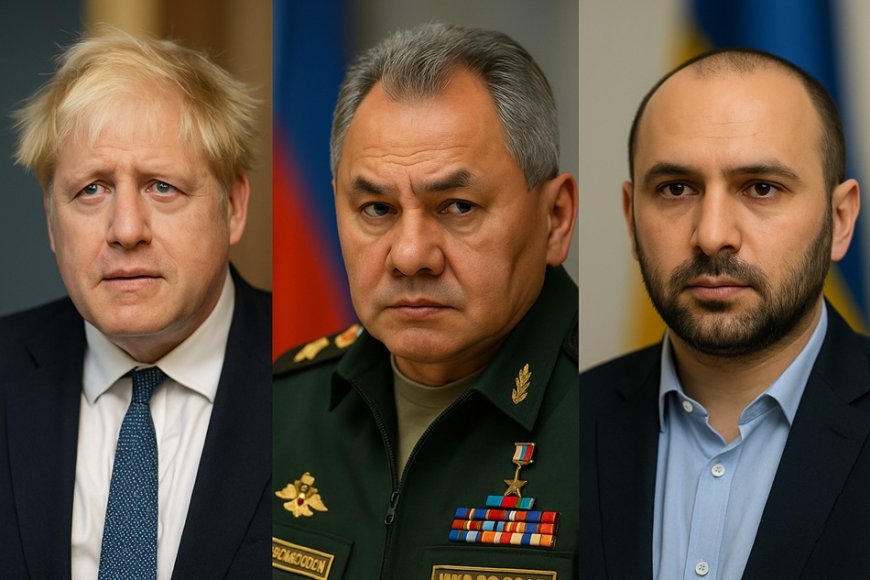
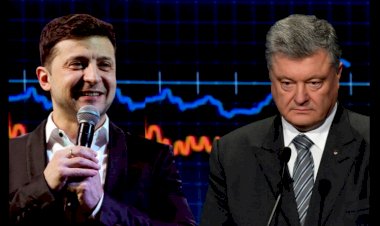
Boris Johnson, Sergey Şoygu ve Rüstem Umerov
This tendency is visible not only in the U.S. but across other major players. The election of Boris Johnson in the UK, Putin’s decision to entrust key posts to figures of Turkic background, Ukraine’s appointment of Crimean Tatar Rustem Umerov as defense minister, and Japan’s reappointment of Uyghur-origin MP Arfiya Eri as parliamentary vice minister for foreign affairs are all signs of the same thing: political actors see Turkish/Turkic or Muslim identities as “connective tissue” in a changing world. It is quite likely that China, too, will sooner or later bring more Uyghur-origin figures into visible positions as part of a balancing effort.
Turkey occupies a unique place in this picture. Western capitals often criticize Ankara, but they can’t quite detach from it. The reason is simple: without Turkey, you can’t build a workable strategy for the Middle East, the Eastern Mediterranean, the Caucasus or even parts of Africa. The Ottoman legacy, Turkey’s historic role as the center of the caliphate, and today its symbolic position in the Muslim world still make it a “central country” in the eyes of many Muslim societies.
Western governments know this. They know Turkey and the Turks have real influence in the Turkic and Islamic geography. They also know that the actor most capable of containing Iran, of loosening Russia’s grip on Central Asia, and of restoring balance in the Caucasus is often the Turkic world led by Turkey. Russia’s failure to get the result it wanted in Ukraine, despite the war approaching its fourth year, has cost Moscow both power and prestige — and that has accelerated realignments in its own neighborhood. It has also made it easier to pull parts of the Turkic world closer to Turkey and, indirectly, to the West.
Another trend is unfolding in Europe: the rise of Turkish and Muslim politicians. In Germany, the Netherlands and elsewhere, the number of politicians of Turkish origin is growing rapidly. Even in critical areas like security and intelligence, people with Turkish backgrounds have been appointed. This can be read not only as successful integration, but also as a way of staying politically and socially connected to Muslim communities through trusted figures.
Put all of this together and a clearer picture emerges: in the coming years we will see more politicians of Turkish origin — and with a strong Muslim identity — taking higher positions in Western countries, including the U.S. This will allow the West to pursue global leadership not only through hard power, but through figures who can generate local legitimacy in the Muslim world. In other words, Washington and European capitals will be able to say, “This message is coming from one of you,” while still steering the overall strategy.
Some Islamic sources speak of Islam “rising from the West,” and thinkers like Bediüzzaman interpreted certain hadiths and Quranic hints in that direction. Whether one accepts these spiritual readings or not, the political reality is moving in a direction that makes such interpretations more plausible to some believers: the West is no longer hesitant to work through Turkish and Muslim cadres — it is actually starting to prefer it.
So the conclusion is this: if the U.S. and Europe want to sustain their global role in a world where the Muslim and Turkic spheres matter more, doing it “through Turks and Muslims” is the most efficient route. Seen from that angle, “an American president of Turkish origin” stops being a fantasy and starts looking like the logical outcome of a long-term geopolitical calculation.



 Editor2