Is the Trump–Putin peace track a dead end? Turkey’s potential guarantor role stirs debate
Post-Alaska, conflicting U.S.–Russian signals and Moscow’s rejection of NATO troops cloud Ukraine peace prospects. With Europe hesitant, Turkey’s potential guarantor role is debated—but would require a ceasefire, a tight mandate, and broad political consent.
 Editor2


Is the Trump–Putin peace track a dead end? Turkey’s potential guarantor role stirs debate
YUSUF INAN / YEREL GÜNDEM / ANKARA
After Alaska: lost momentum and mixed messages
Following the Alaska meeting between U.S. President Donald Trump and Russian President Vladimir Putin, hopes for a rapid breakthrough have dimmed. While Trump signaled “progress soon,” the Kremlin has reiterated firm objections to any NATO-branded presence in Ukraine. The gap between upbeat political messaging and the absence of concrete steps—such as a verified ceasefire—has fueled doubts over the sustainability of the process.
Peacekeepers or provocation? NATO is Moscow’s red line
A central sticking point is whether an international peace presence could deploy to Ukraine once talks begin. Russian officials have repeatedly rejected the idea of NATO troops operating—even under a peacekeeping label—near Russia’s borders, warning of uncontrollable escalation. That stance leaves limited space for a mission that Kyiv considers essential to deter renewed offensives and to verify compliance on the ground. Any workable format would require an agreed mandate, rules of engagement, and a chain of command that all parties can live with—none of which exist yet.
Who would guarantee the deal? Europe hesitates as public resists
In Europe, governments remain wary of committing soldiers to Ukraine. Public opinion across several EU states is generally cool toward sending national troops, constraining leaders’ options. As a result, talk of a broad, NATO- or EU-framed guarantor coalition has softened into vaguer references to “security assurances,” financial packages, training, and air-defense support from outside Ukraine’s territory. With key capitals noncommittal, the question of credible guarantors remains unresolved—and so does any mechanism to enforce a potential accord.
Ankara’s calculus: ‘Ceasefire first, then mission’
Turkey’s position, as articulated in recent briefings, is that any peace presence must be preceded by a ceasefire, a clearly defined mandate, and agreed contributions from participating countries. Ankara emphasizes support for initiatives that produce real stability, while cautioning against acting on speculative scenarios. This approach keeps Turkey at the diplomatic table without rushing into on-the-ground commitments that could outpace political reality. It also aligns with Ankara’s preference to work through deconfliction channels with both Kyiv and Moscow while preserving room for mediation.


What would a ‘Turkish-only’ deployment actually mean?
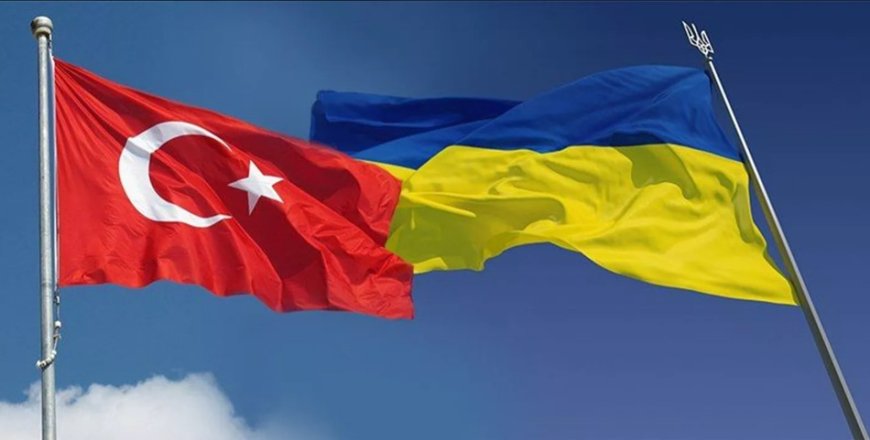
With European militaries reluctant and Moscow opposed to NATO insignia, some analysts have floated a scenario in which only Turkish forces deploy, under Turkey’s national flag rather than a NATO banner. In practice, such a model would carry significant implications:
-
Legal/political basis: A UN Security Council mandate would likely face a veto; absent that, deployment would require a tailor-made agreement among the parties—at minimum Ukraine and Turkey, and ideally with explicit Russian acquiescence. The narrower the mandate, the more it would focus on ceasefire monitoring, buffer-line verification, mine clearance, and protection of humanitarian corridors rather than coercive tasks.
-
Kremlin’s perception: Turkey’s channels with Moscow and its non-NATO flag might be less objectionable to Russia than a formal NATO mission—but this is speculative until publicly acknowledged by the Kremlin. Any perceived mission creep could revive objections and raise risks for the deployed force.

-
Operational risk for Ankara: A solo deployment would elevate force-protection requirements and logistical burdens. Clear rules of engagement, robust ISR support, medical evacuation, and sustained political backing in Ankara (including a parliamentary mandate) would be essential to avoid mission overstretch.
-
Diplomatic leverage vs. exposure: Leading a narrowly scoped mission could strengthen Turkey’s hand as a mediator and potential host for future leader-level meetings. Equally, failure or escalation would carry reputational and security costs, making meticulous mandate design and transparent coordination with partners indispensable.


Bottom line: not a dead end—yet—but very thin ice
Conflicting statements from Washington and Moscow, combined with Europe’s caution and Russia’s categorical rejection of NATO troops, point to a fragile process. For talks to advance, at least a verifiable regional ceasefire and a jointly agreed monitoring mechanism are needed. In that framework, Turkey could become a pivotal guarantor—but only under a narrowly defined mandate, with explicit political consent from all sides and practical backing (financial, technical, and diplomatic) from European partners. Absent those conditions, a “Turkish-only” option would remain a high-risk, low-yield proposition—and the peace track would continue to skate on thin ice.
#Ukraine #PeaceProcess #NATO #Guarantor #Turkey #Ceasefire #Alaska #Kremlin
YUSUF INAN/ YEREL GÜNDEM