MHP dissolves Kütahya and Eskişehir chapters in party overhaul
Following a massive restructuring in Istanbul, MHP Deputy Chairman Semih Yalçın announced the dissolution of the Kütahya and Eskişehir provincial chapters.
 Editor2


Ahmet Taş | Wise News Press
ANKARA, TURKEY — The Nationalist Movement Party (MHP) has officially dissolved its provincial executive committees in Kütahya and Eskişehir, appointing new leadership cadres in a continuing wave of internal organizational restructuring.
This expansive overhaul, driven by the party's central executive committee and utilizing specific statutory powers, signals a significant strategic realignment within the nationalist faction. The dismissals in the Aegean and Central Anatolian provinces follow a massive reshuffle in Istanbul earlier this month, highlighting a nationwide effort by MHP headquarters to consolidate central authority, refresh local political networks, and prepare for upcoming political challenges in Turkey's dynamic electoral landscape.
Official statements and statutory authority
The announcement regarding the sweeping changes was made public by MHP Deputy Chairman Semih Yalçın, who oversees the party's organizational structures nationwide. Through a formal written statement distributed to the press and shared on social media platforms, Yalçın confirmed that the central administration had intervened directly in the provincial hierarchies.
"The Nationalist Movement Party Kütahya Provincial Organization has been dissolved in accordance with Article 34 of our bylaws, based on the authority granted by Articles 52 and 54 of our party bylaws," Yalçın stated.



In Turkish political party structures, Articles 52 and 54 typically grant the Central Executive Board (MYK) and the party chairmanship the authority to intervene in, suspend, or completely dissolve lower-level provincial and district organizations if they are deemed to be underperforming or acting out of alignment with the central party doctrine. Article 34 generally outlines the procedural application of these dismissals. By invoking these specific articles, MHP leadership is emphasizing strict adherence to internal discipline and hierarchical loyalty.
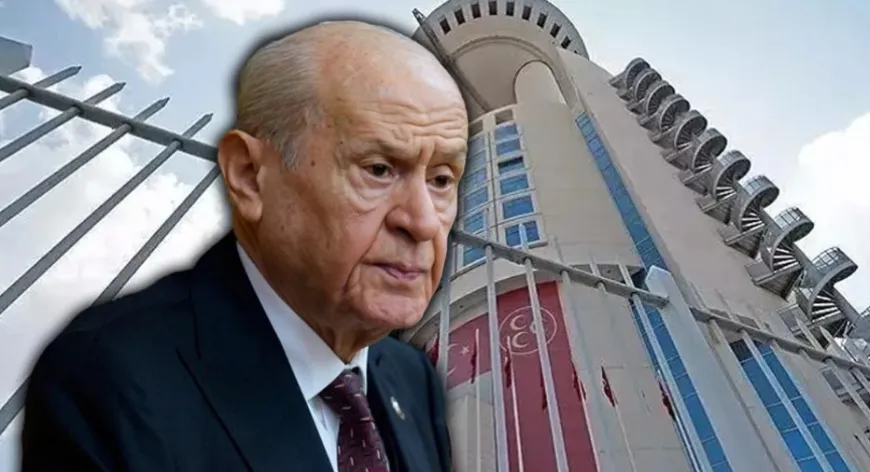
The MHP headquarters in Ankara, where the central executive board makes strategic decisions regarding provincial leadership. (Photo: Agency/Wise News Press)
Strategic realignment in Kütahya
Following the dissolution of the existing board in Kütahya, Yalçın announced the immediate appointment of a new provincial head to prevent any administrative vacuum. Mehmet Ali Türker has been officially appointed to the position of MHP Kütahya Provincial Chairman.


Kütahya, located in the inner Aegean region, represents a traditional stronghold for conservative and nationalist politics in Turkey. Maintaining a robust, highly motivated, and fiercely loyal provincial organization in this region is considered vital for the MHP's overall vote share. The appointment of Türker is largely seen as a move to revitalize the party's grassroots engagement in the province, ensuring that the local branches operate in perfect synchrony with the directives emanating from the capital.
Eskişehir restructuring under Ayhan Sezer
Shortly after the announcement concerning Kütahya, the MHP headquarters rolled out a parallel decision for the neighboring province of Eskişehir. Utilizing the exact same statutory framework, the Eskişehir Provincial Organization was dissolved. Yalçın confirmed that Ayhan Sezer has been appointed as the new MHP Eskişehir Provincial Chairman.
Eskişehir presents a markedly different political demographic compared to Kütahya. Known for its large student population, industrial zones, and historically strong secular-leaning voter base, Eskişehir is often a highly competitive battleground during local and general elections. For the MHP, maintaining a dynamic and strategic presence in Eskişehir requires an agile provincial leadership capable of appealing to a diverse electorate while maintaining the core tenets of the nationalist movement. The handover to Sezer indicates a tactical shift aimed at enhancing the party's operational effectiveness in this critical Central Anatolian hub.
The Istanbul precedent and nationwide ripple effects
The abrupt changes in Kütahya and Eskişehir do not exist in a vacuum; they are part of a broader,
On April 6, 2026, Semih Yalçın announced the complete dissolution of the MHP Istanbul Provincial Organization, alongside all 39 of its district-level organizations. Managing Istanbul—Turkey's most populous city and its economic powerhouse—is often considered the most critical task for any political party. The decision to wipe the slate clean in Istanbul and appoint Volkan Yılmaz as the new Istanbul Provincial Chairman demonstrated the central leadership's willingness to take radical steps to reorganize its political machinery from the ground up.
Internal party dynamics and leadership consolidation
Political analysts and local media outlets have characterized this wave of dismissals as an internal political earthquake. Specifically, reports have referenced these systematic changes as a continuation of the "İzzet Ulvi Yönter earthquake," referring to another highly influential MHP Deputy Chairman known for his strong influence within the party's inner circles.
While the official statements do not explicitly detail the underlying reasons for the dismissals beyond statutory compliance, such widespread restructuring typically points to a consolidation of power. In the highly disciplined environment of the MHP, ensuring that all provincial and district heads are completely aligned with the strategic vision of Chairman Devlet Bahçeli and his closest deputies is paramount. The swift replacement of entire executive boards in major provinces suggests a preemptive elimination of any internal dissent or organizational lethargy.
Supporters waving flags at a political gathering. The recent structural changes aim to mobilize grassroots support across various provinces. (Photo: Agency/Wise News Press)
Future implications for the political landscape
As the MHP continues to recalibrate its provincial networks, the ultimate goal appears to be maximizing the party's operational readiness. By installing trusted figures like Türker in Kütahya, Sezer in Eskişehir, and Yılmaz in Istanbul, the central administration is building a heavily fortified, centrally commanded political infrastructure.
Observers of Turkish politics are closely watching these developments. The Nationalist Movement Party plays a critical role in the broader political equilibrium of the country through its alliance strategies. Ensuring that its local organizations are free from internal friction and fully capable of mobilizing voters will heavily influence the party's performance and bargaining power in future electoral cycles. While the exact scope of further dismissals remains unknown, the rapid succession of these announcements suggests that the MHP's organizational transformation is far from over.